
Your car's lifespan depends less on luck and more on the decisions you make between oil changes. For drivers in Centennial and Parker, that challenge gets real fast: Colorado's altitude, freezing winters, dusty summers, and mountain weekend trips all push your vehicle harder than a national maintenance average accounts for. A generic schedule pulled from a quick internet search won't protect your investment the way a thoughtful, vehicle-specific routine will. This guide breaks down exactly how to build a maintenance plan that actually fits your car, your driving habits, and your local conditions.
Table of Contents
- Why your owner's manual is the gold standard
- Checklist rhythm: building a routine that actually works
- Fine-tuning your schedule: low-mileage, severe duty, and local edge cases
- Fluid changes, filters, and inspections: the nuanced essentials
- What most routines miss: the value of local context and skepticism
- Your next step to reliable car care
- Frequently asked questions
Key Takeaways
| Point | Details |
|---|---|
| Follow your owner’s manual | Your car’s manual is the most accurate maintenance guide—use it as your foundation. |
| Build a checklist routine | Layer monthly, quarterly, and annual checks to prevent missed service and costly repairs. |
| Adjust for local conditions | Shorten intervals for severe weather, mountain driving, or infrequent vehicle use common in Colorado. |
| Be skeptical and informed | Ask for evidence about service recommendations and avoid unnecessary upsells. |
Why your owner's manual is the gold standard
Most drivers have heard the phrase "change your oil every 3,000 miles." It's repeated so often it feels like law. But that number is outdated for most modern vehicles, and blindly following it can cost you money without adding protection. The best-practice approach is to follow the specific maintenance schedule in your vehicle's owner's manual, using mileage and time intervals rather than generic advice.
Here's why that matters. A 2020 Honda CR-V and a 2015 Ford F-150 diesel have completely different fluid specs, filter types, and service windows. Treating them the same is like using the same prescription glasses for two different people. Your manual was written for your exact powertrain, transmission type, and operating conditions.
The key phrase to understand is "whichever comes first." Many manufacturers schedule tasks using either mileage or time, whichever comes first. So if your manual says "oil change every 7,500 miles or 12 months," and you only drive 4,000 miles a year, you still need that oil change annually. Time-based degradation is real, even when the odometer barely moves.
Here are the most common pitfalls drivers fall into when ignoring vehicle-specific schedules:
- Skipping spark plug service because "the car runs fine," when the manual calls for replacement at 60,000 miles
- Over-servicing transmission fluid based on a shop's generic recommendation rather than the automaker's actual spec
- Missing coolant flushes because no warning light appeared, even though the interval passed months ago
- Delaying timing belt replacement on interference engines, which can cause catastrophic internal damage if it snaps
"The best way to make your car last is to follow the maintenance schedule in your owner's manual, not what a shop or a neighbor suggests unless they can show you it matches your specific vehicle."
Pro Tip: If a shop recommends a service that isn't in your manual's interval chart, ask them to show you where that recommendation comes from. A trustworthy shop will point to your manual or a manufacturer service bulletin. If they can't, that's a red flag worth noting. Check out our essential maintenance tips for more on what to watch for.
Checklist rhythm: building a routine that actually works
Knowing your intervals is step one. Building a system that ensures you actually follow through is step two. A consistent checklist-based rhythm using monthly, quarterly, and annual timeframes dramatically reduces the chance of missing critical tasks, especially when combined with your manufacturer's plan.
Think of it like layering. Your owner's manual gives you the "what and when." A structured checklist gives you the "how to remember it." Together, they create a fail-safe system that works even during busy stretches of life.
Here's a practical framework to follow:
- Monthly (takes 10 minutes): Check tire pressure, inspect all fluid levels visually, look for any warning lights, and do a quick walk-around for unusual wear, leaks, or damage under the vehicle.
- Every 3 months or 3,000 miles: Inspect wiper blades, check battery terminals for corrosion, verify brake fluid color, and confirm your next oil change milestone.
- Every 6 months: Rotate tires if not already done, inspect brake pads for thickness, check air filter condition, and test all exterior lights.
- Annually: Schedule a full inspection covering belts, hoses, suspension components, coolant condition, and cabin air filter. This is also the time to review your manual for any upcoming major service intervals.
- Seasonally in Colorado: Before winter, check antifreeze concentration, inspect battery cold-cranking amps (CCA), and verify your all-season or winter tires are road-ready. Before summer, check A/C performance and inspect the cooling system.
A good maintenance schedule includes regular inspections, fluid checks, filter replacements, and timely responses to warning signs. The warning sign piece is critical. If your check engine light comes on, don't wait until your next scheduled service. Address it immediately, because small issues become expensive repairs when ignored.
Pro Tip: Sync your quarterly checks with the seasons. Colorado's four distinct seasons give you a natural reminder system. When the weather shifts, it's time to run through your checklist. Write it on your calendar or set a phone reminder so it actually happens.
Our guide on common car issues walks through what warning signs to take seriously and which ones can wait, which is useful when building your response plan into the checklist.
Fine-tuning your schedule: low-mileage, severe duty, and local edge cases
Your basic schedule won't fit every situation. Centennial and Parker drivers encounter real-world conditions that require custom adjustments. Two of the most common edge cases are low-mileage driving and severe duty use, and both require a different approach than the standard interval chart.
Low-mileage drivers often assume they can skip services because the odometer hasn't moved much. That's a costly mistake. Even cars that aren't driven much still need time-based maintenance: weekly short drives to keep seals lubricated, regular tire pressure checks to prevent flat spots, and oil changes based on months elapsed rather than miles driven. Oil oxidizes and loses its protective properties over time, regardless of how far you've traveled.
Severe duty use is more common in this area than most drivers realize. Towing, extreme temperatures, dusty conditions, and frequent short trips can justify shorter service intervals than the normal schedule. If you're hauling a trailer to the mountains every other weekend, your transmission and brakes are working significantly harder than a commuter vehicle on flat highway.
Here's a comparison of how intervals shift across driving profiles:
| Service item | Normal interval | Severe duty interval | Low-mileage interval |
|---|---|---|---|
| Engine oil | 7,500 miles / 12 months | 3,000 to 5,000 miles / 6 months | 12 months regardless of mileage |
| Transmission fluid | 30,000 to 60,000 miles | 15,000 to 30,000 miles | Per manufacturer time spec |
| Brake fluid | Every 2 years | Every 12 to 18 months | Every 2 years |
| Air filter | 15,000 to 30,000 miles | 10,000 to 15,000 miles | Annual inspection |
| Coolant flush | Every 5 years / 100,000 miles | Every 3 years | Every 5 years |
Haynes also publishes a recommended maintenance schedule that can be shorter than manufacturer guidance for daily-driven vehicles, particularly for off-road use, towing, and short cold-weather trips in freezing temperatures. This is a useful cross-reference if you want a conservative, safety-first approach.
Quick adjustments for Centennial and Parker drivers to consider:
- If you drive less than 7,500 miles per year, switch to annual oil changes at minimum
- If you regularly drive I-25 or C-470 in stop-and-go traffic, consider the severe duty schedule for brake and transmission service
- If you tow a boat, camper, or trailer even occasionally, your transmission and cooling system need more frequent attention
- If your vehicle sits for weeks at a time, start it and drive it at least 15 to 20 minutes weekly to prevent seal drying and fuel degradation
Use our troubleshooting guide to identify whether any current symptoms suggest your schedule needs to shift sooner rather than later.
Fluid changes, filters, and inspections: the nuanced essentials
With your calendar and local adjustments in place, it's time to focus on the specific service items that most affect long-term reliability. Not all maintenance tasks carry equal weight. Fluids and filters are the backbone of your vehicle's health, but the details matter more than most drivers realize.
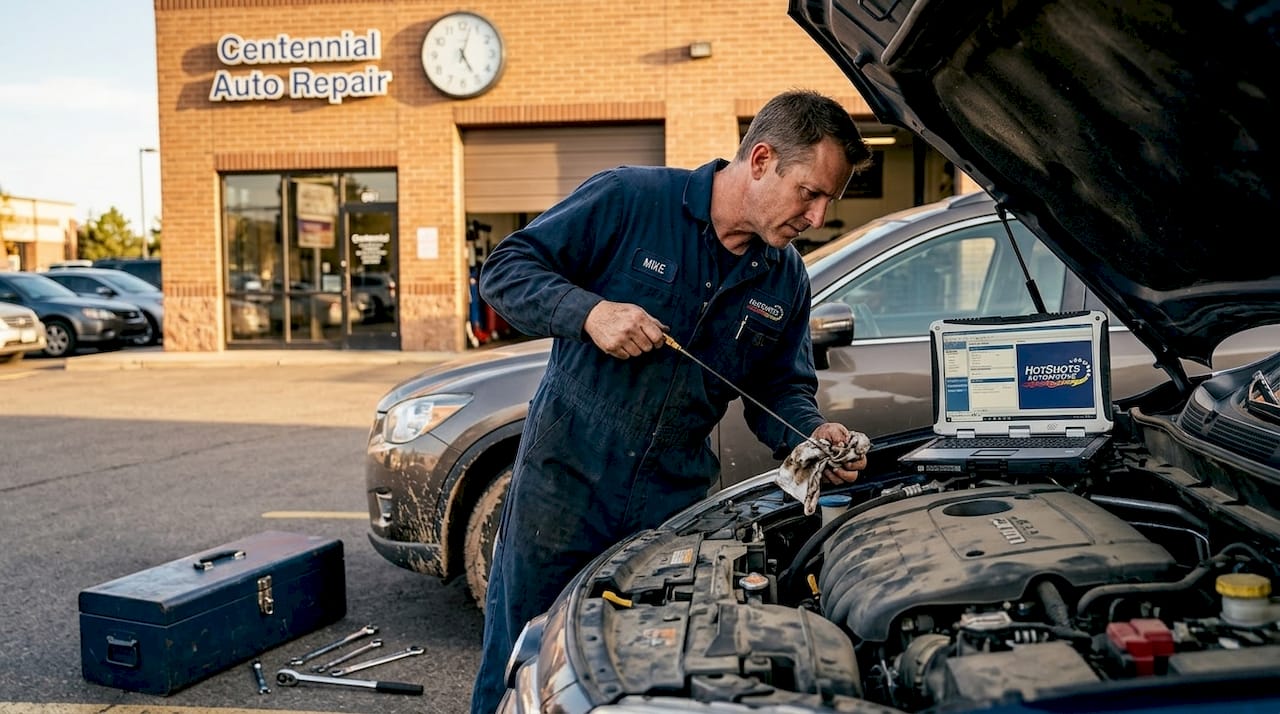
Engine oil is the most familiar. Modern synthetic oils in newer vehicles can genuinely go 7,500 to 10,000 miles between changes. Pushing older vehicles with conventional oil past 5,000 miles is riskier. Check your manual for the exact spec.
Transmission fluid is where things get nuanced. Transmission fluid service intervals vary widely, and over-servicing can actually cause problems. Some sealed automatic transmissions are designed to go 60,000 to 100,000 miles between fluid changes. Changing the fluid too frequently in these systems can disturb the friction material that has built up and cause shifting issues. Always verify the automaker's recommendation before authorizing this service.
Brake fluid absorbs moisture over time, which lowers its boiling point and reduces stopping power. Most manufacturers recommend replacement every two years. In Colorado, where mountain driving puts real heat into your brakes, this interval matters.
Coolant protects your engine from both freezing and overheating. At altitude, your cooling system works harder. A coolant flush every five years or 100,000 miles is standard, but check your manual for the specific type your vehicle requires.
Air filters (both engine and cabin) are often upsold unnecessarily. Inspect them visually before agreeing to replace them. A dirty filter is obvious. A slightly dusty one still has life left in it.
Here's a quick service interval reference for modern vehicles:
| Fluid or filter | Standard interval | Notes |
|---|---|---|
| Engine oil (synthetic) | 7,500 to 10,000 miles | Verify with manual |
| Transmission fluid | 30,000 to 100,000 miles | Varies widely by make and model |
| Brake fluid | Every 2 years | Sooner for mountain/towing use |
| Coolant | 5 years / 100,000 miles | Check fluid type in manual |
| Engine air filter | 15,000 to 30,000 miles | Inspect visually first |
| Cabin air filter | 15,000 to 25,000 miles | More often in dusty conditions |
Watch for these signs that a shop may be upselling rather than genuinely recommending needed service:
- Recommending transmission fluid changes every 15,000 miles on a vehicle with a sealed unit
- Suggesting coolant flushes annually with no evidence of degradation
- Pushing cabin air filter replacement at every oil change without showing you the old filter
Pro Tip: Before any major fluid service, look up your vehicle's exact specification on the manufacturer's website or in your manual. Then ask your technician to confirm the service matches that spec. A shop that welcomes that question is one worth trusting. Check our guide on maintenance red flags to stay informed.
What most routines miss: the value of local context and skepticism
Here's what we've learned after serving Centennial and Parker drivers since 2005: the most reliable maintenance routine isn't the most complicated one. It's the one built on your owner's manual, adjusted for real Colorado driving, and protected by a healthy dose of skepticism.
Most drivers either over-trust national averages or blindly follow whatever a shop recommends. Neither approach serves your vehicle well. National averages don't account for Parker's elevation, Centennial's winter freeze-thaw cycles, or the fact that many local drivers combine highway commuting with weekend mountain trips. That combination puts unique stress on cooling systems, brakes, and transmissions that a standard interval chart simply doesn't capture.
The skepticism piece is just as important. We've seen drivers spend hundreds of dollars on services their vehicles didn't need because a shop recommended it confidently. Confidence isn't the same as accuracy. When a technician recommends a service, ask for the source. Is it in your manual? Is it a manufacturer bulletin? If the answer is "we just recommend it for all vehicles," that's not good enough.
Our perspective is this: layer your approach. Start with the owner's manual as your foundation. Add time-based checks as a failsafe for low-mileage situations. Apply local context for Colorado-specific conditions. And use skepticism as your shield against unnecessary spending. That combination, more than any single checklist or interval table, is what actually keeps vehicles running well past 150,000 miles. Visit our practical maintenance wisdom page for more on how we approach this with every vehicle we service.
Your next step to reliable car care
Building a solid maintenance plan is the smartest investment you can make in your vehicle's longevity. But knowing the intervals is only part of the equation. Having a trusted shop that understands your specific vehicle, your driving habits, and your local conditions makes all the difference.
At HotShots Automotive, we've been helping Centennial and Parker drivers navigate exactly this kind of decision since 2005. Our ASE-certified technicians don't just run through a generic checklist. We review your Centennial car repair services needs based on your make, model, mileage, and how you actually drive. Whether you need a full inspection, a fluid service, or just a second opinion on what a previous shop recommended, we're here to give you honest answers. Explore our five auto maintenance tips or schedule service at HotShots Automotive today and drive with confidence.
Frequently asked questions
What's the safest maintenance interval to use if I lost my owner's manual?
Follow a reputable published checklist, such as the Haynes maintenance schedule or the Kelley Blue Book maintenance guide, and err toward shorter intervals if you drive in severe conditions. You can also find your manual online through the manufacturer's website using your VIN number.
If I barely drive, do I still need oil changes and scheduled service?
Yes. Time-based intervals still apply even for low-mileage vehicles because oil and fluids degrade chemically over time regardless of how far you've driven. Plan on at least one oil change per year even if you drive under 5,000 miles.
How do I know if I'm on a normal or severe duty schedule?
Check your owner's manual for the severe duty definition. It typically covers frequent towing, extreme temperatures, dusty roads, and stop-and-go city driving, all of which are common in Colorado winters and mountain driving situations.
Is it bad to service my transmission fluid more often than recommended?
Yes, it can be. Changing transmission fluid too often in sealed automatic transmissions can disturb friction deposits and cause shifting problems. Always verify your automaker's exact guidance before authorizing this service.